
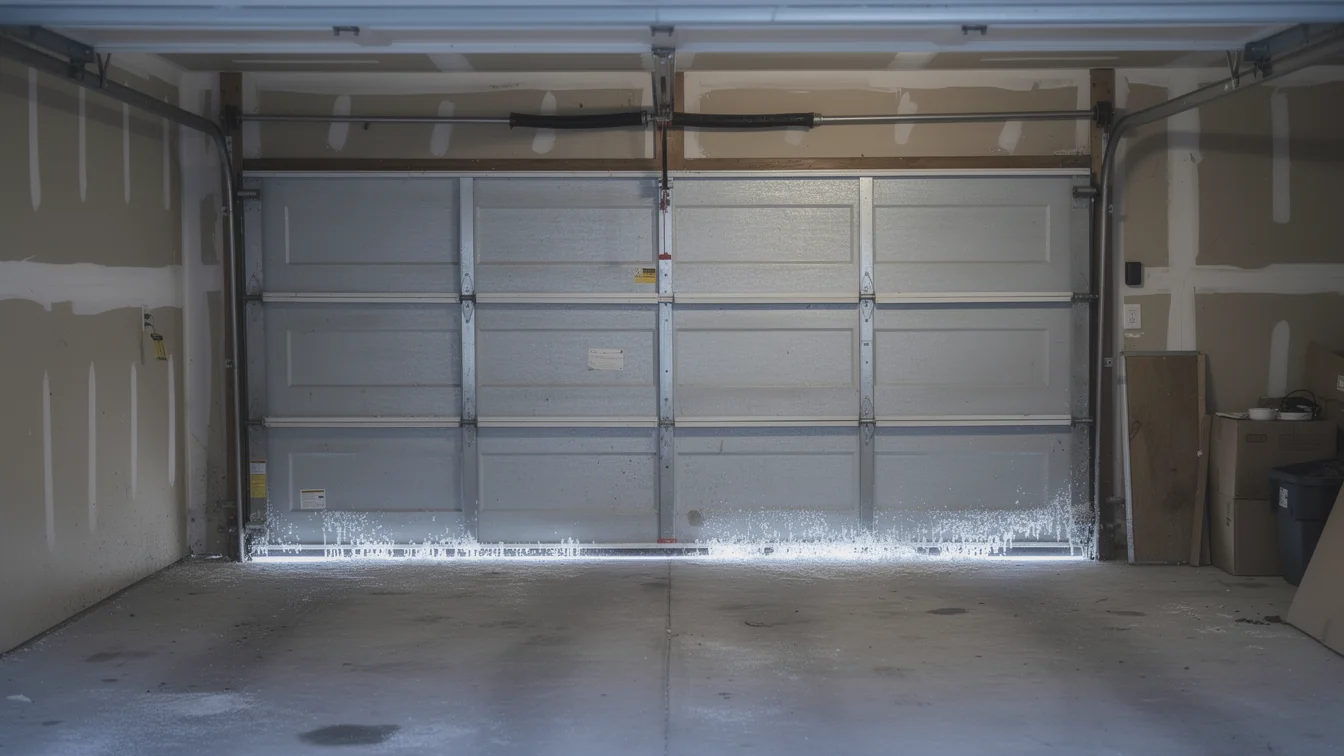
Garage Doors on Lancaster's Older Housing Stock
Most Lancaster-area houses date to 1938-1995, many from the 1960s-70s boom, with original hardware never built for today's cold-climate temperature swings and heavier doors.
Read moreMost Lancaster-area houses date to the 1960s and 70s, with doors and hardware from that era. Here's how to tell if yours is worth repairing or replacing.
Local detail
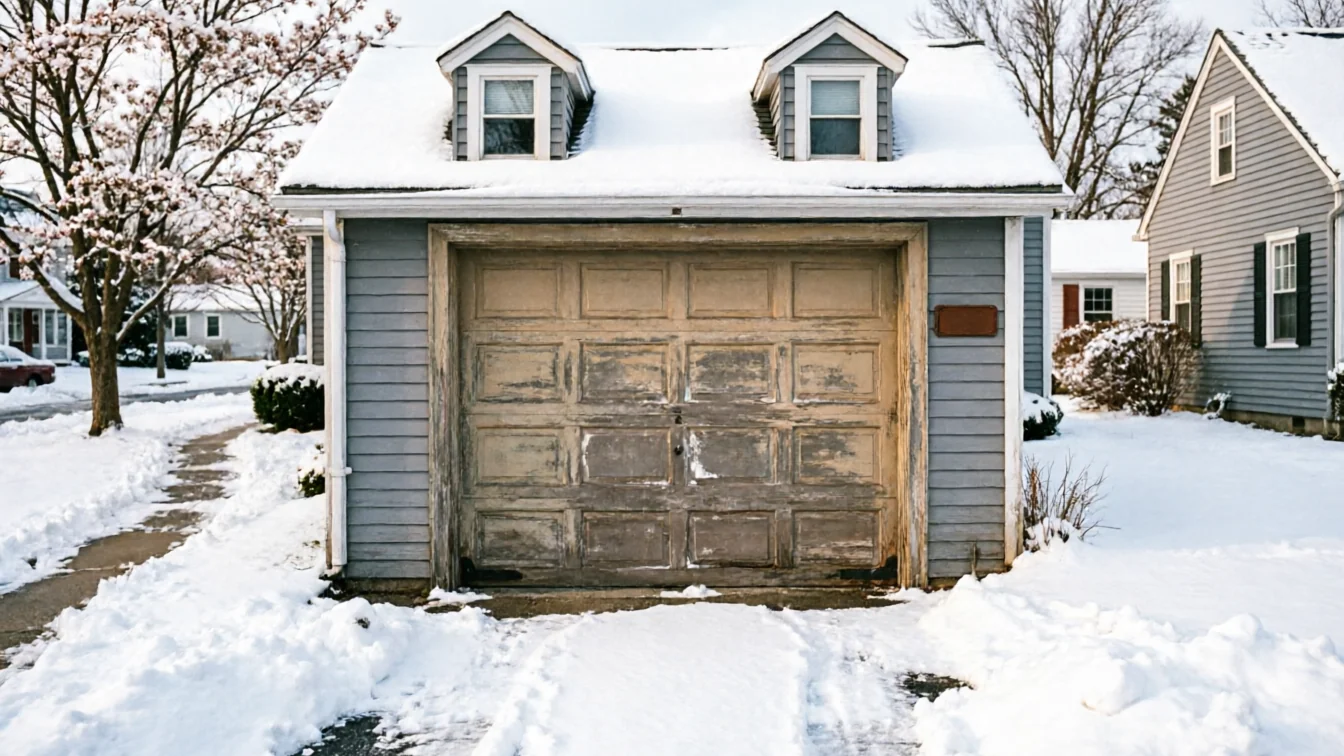
The mistake we see most around here is treating every old door the same way. Housing in this service area went up mostly between 1938 and 1995, with the typical house dating to 1973, and that spread matters. A door from a 1940s build and a door from a 1975 build are not the same machine. The older one might still run on an extension-spring setup with no safety cables. The 1970s door is more likely torsion, but the springs, drums, and cable drums on it were sized for the original steel panel weight, not for whatever insulated replacement got bolted on sometime in the last 20 years.
People call wanting a quick spring swap and don't realize the drum or shaft is worn to match a door that's already been patched twice. Across the 50 named communities in this region, from Manheim out to Ephrata and Mount Joy, you'll find the same pattern: 1960s and 70s stock, original hardware still in a lot of garages, and owners assuming a repair is always cheaper than it actually is once you add up parts that don't match anymore. Fixing the symptom instead of the mismatch is how a $150 call turns into three visits.
The area
This area sits in the severe end of the cold climate band, and that shapes what breaks first. Repeated freeze-thaw cycles work on steel the same way they work on pavement - not all at once, but every winter takes a little more. Torsion springs lose temper faster when they're cycling through cold snaps and thaws than they would in a mild climate. Track bolts on older doors, especially ones installed before galvanizing was standard practice, start to show rust at the mounting points first.
Panel seams on original steel doors from the 1960s and 70s stock common in this area tend to flex more in cold weather, and flexing seams are where rust starts from the inside out, not the outside. You won't see it until the panel bottom is already soft. Weatherstripping on a door that old has usually been replaced once or twice already, but the track alignment underneath it often hasn't, so the seal never quite seats right once the metal gets cold and contracts. That's a maintenance issue, not a parts issue, and it's one owners here fix wrong more often than right.
What we find
When a door that's been fine for years suddenly isn't, the mechanics usually come down to fatigue, not failure. A torsion spring rated for a certain door weight doesn't snap on day one of being undersized - it just wears faster, and on houses built in the 1938-1995 range that are now 30 to 85 years old, a lot of springs are well past any reasonable service life even if they haven't broken yet.
With 40,693 owner-occupied houses among roughly 103,156 households across this area, there's a lot of original equipment still in service that nobody ever budgeted to replace, because it never gave an obvious reason to. That's the honest limitation here: we can't always tell you a door is fine just because it's still opening. A door that's binding, dropping unevenly, or needs a shove partway up is past the point where tightening bolts fixes it.
At a median household income of $85,302 in this area, replacement is within reach for most owners once the math is laid out - track, drum, and panel issues on a door built to 1970s tolerances often cost more to keep patching than to replace outright, especially once you're past the second repair on the same door.
How we work
Call before the door fails all the way, not after. A spring that's visibly stretched, a cable fraying at the drum, or a door that's noticeably heavier to lift by hand than it used to be - those are the signs worth a visit while it's still a scheduled job instead of an emergency one.
We can't always get an exact match for hardware on a door from the 1960s or 70s stock common in this area; some of those parts are long out of production, and sourcing a close equivalent can take longer than a same-week repair on a newer door. That's worth knowing going in, especially if the door is original to a house built closer to 1938 than to 1995.
If you're anywhere from Manheim or Millersville out to Lititz, Ephrata, or Quarryville, the pattern is the same: older stock, cold-climate wear, and a decision point between one more repair and a full swap. We'd rather tell you honestly which side of that line your door is on than sell you a part that buys six months.
Questions
There's no fixed age cutoff. A well-maintained door from the 1970s can still be worth repairing. What matters more is how many prior repairs it's had, whether the track and drums still match the panel weight, and whether rust has reached the panel seams. Once you're past a second major repair on the same door, replacement usually pencils out better.
This area sits in the severe end of the cold climate band, and steel springs lose temper faster through repeated freeze-thaw cycles than they would somewhere milder. A spring that's been cycling through cold winters for 30 or 40 years is usually closer to the end of its life than its age alone would suggest.
Not always. Some hardware from that era is out of production, and finding a close match can take longer than a standard repair. We'll tell you upfront if that's the case rather than install a mismatched part that causes problems down the line.
Recommendation
More garage door guides for Lancaster homeowners.
Most Lancaster-area houses date to 1938-1995, many from the 1960s-70s boom, with original hardware never built for today's cold-climate temperature swings and heavier doors.
Read more
Most Lancaster garage doors run openers built for houses wired in the 1960s and 70s - here's what cold-season power cuts do to them and when to call a tech.
Read more
Lancaster homes mostly date to 1973, and the cold climate here is hard on old torsion springs and tracks.
Read moreReady when you are
Lancaster Garage Door Pros repairs and installs garage doors, springs and openers in Lancaster, PA and the surrounding area.