
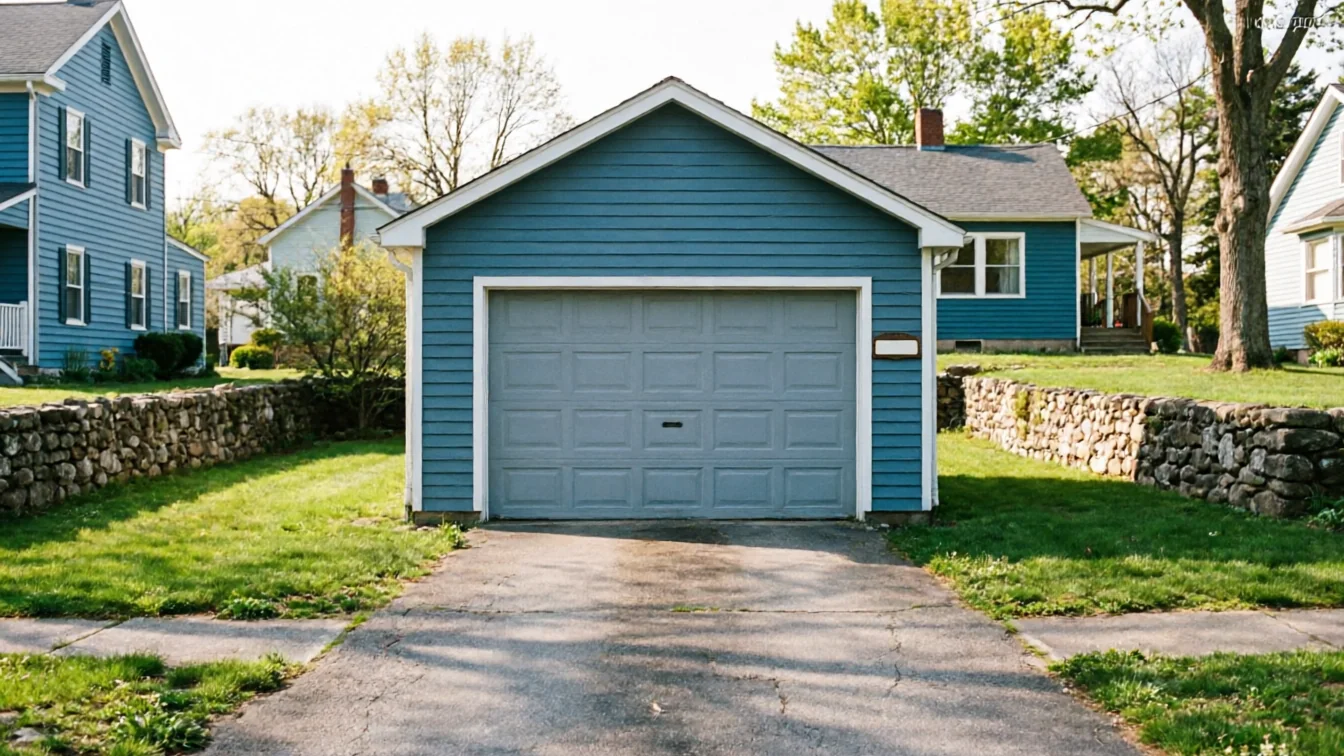
Detached vs Attached Garages: What Lancaster Houses Actually Have
Lancaster homes built between 1938 and 1995 have detached or attached garages with different weak points.
Read moreMost Lancaster garages went up between 1938 and 1995, many on slabs that have shifted for decades. Here's why that misaligns safety sensors and what to do about it.
Local detail
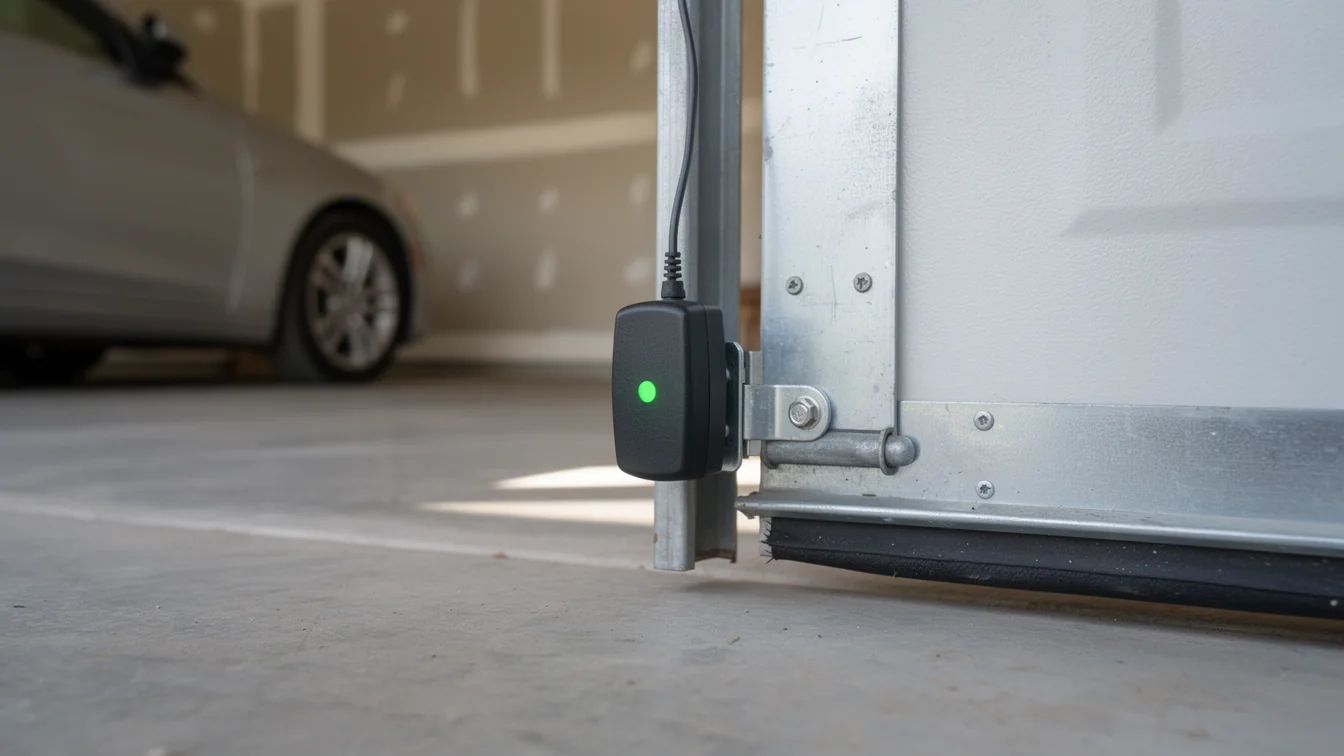
The usual mistake is treating a blinking sensor light as an opener problem. It almost never is. On the housing stock around here - most of it built between 1938 and 1995, with the bulk going up in the 1960s and 70s across places like Manheim, Millersville, and Landisville - the sensors are mounted on brackets that were installed decades before anyone worried about photo-eye alignment at all. Those brackets get bumped by a bike, a trash can, a kid's bat, and nobody notices because the door still closes. Then one cold morning it won't, and the owner assumes the opener logic board died.
The second mistake is cleaning the lenses and stopping there. Dust is rarely the real issue in a house this age. The slab and the stud the bracket is screwed into have both moved a little since 1973, the rough median build year for this area, and a quarter-inch of drift at the bracket is a few inches of mismatch at the beam across a standard door opening. Wiping the lens fixes nothing if the two eyes aren't looking at each other anymore.
The area
This is a severe cold climate, and that matters more for sensors than people expect. The brackets on older garages are usually screwed into wood trim or a concrete block wall, and both of those move with the freeze-thaw cycle every winter. A slab poured in the 60s or 70s, before some of the frost-protection detailing common today, heaves and settles by fractions of an inch as the ground below it freezes and thaws repeatedly through a Lancaster winter. The sensor doesn't move with intent - it moves because the wall or the slab edge it's anchored to is moving.
You'll see this most in late winter into early spring, when sensors that held alignment fine in October start throwing intermittent faults. It's not a coincidence tied to the calendar - it's the ground finishing a season of movement. If your sensors only misbehave for a few weeks a year and then settle down, that's the pattern. If they're off constantly, the bracket itself has likely come loose rather than just shifted with the season.
What we find
Each sensor needs a clear, level line of sight to its pair, and the tolerance is tighter than most owners assume. A small vertical or horizontal shift knocks the beam off and the opener reads it as an obstruction, even with nothing in the doorway. On houses from this era the brackets are often original or close to it, meaning they've had fifty-plus years to loosen, rust, or ride along with a wall that's settled unevenly.
Add in a detached or attached garage with no insulation - common on 1960s and 70s construction in this area - and you get real temperature swings between the sensor housing and the opener head. Plastic housings contract in the cold, metal brackets contract more, and the fasteners holding them to a wall built decades ago were never torqued for that kind of cycling. None of this is a defect in any one part. It's the slow accumulation of movement in a house that's been standing for half a century or more.
How we work
If both lenses are clean, both lights are steady, and the door still won't close, check alignment yourself first - a level and a steady hand can resolve a lot of this without a call. Loosen the wing nuts, nudge the bracket until both LEDs stop blinking, and retighten. That fixes the majority of seasonal drift cases on their own.
Call when the bracket itself is loose in the wall, when the mounting surface has visibly cracked or pulled away from the slab, or when alignment holds for a day and then drifts again - that usually means the anchor point has failed, not just the aim. I'll be honest about the limit here: if the wall or slab edge the bracket is fastened to has settled enough to be out of level, realigning the sensor is a short-term fix. At that point the better job is remounting to a point that isn't moving, and that's worth a second visit rather than guessing at it twice.
Questions
In this climate, the ground and the garage slab go through a freeze-thaw cycle each winter that shifts anchor points by small amounts. Houses built in the 1960s and 70s, common across this area, often have slabs poured without the frost detailing used today, so the movement shows up as sensor drift that eases once the ground stabilizes in spring.
Usually, yes. Loosen the bracket's wing nut, adjust until both LEDs show solid rather than blinking, and retighten. This resolves most seasonal drift. If alignment won't hold for more than a day or two, the mounting point itself has likely failed and needs to be remounted rather than just re-aimed.
No. On older garages in this area, it's more often a bracket that's shifted with the wall or slab than a wiring fault. Check alignment and lens cleanliness before assuming the wiring or logic board is at fault - those are a smaller share of real-world sensor calls.
Recommendation
More garage door guides for Lancaster homeowners.
Lancaster homes built between 1938 and 1995 have detached or attached garages with different weak points.
Read more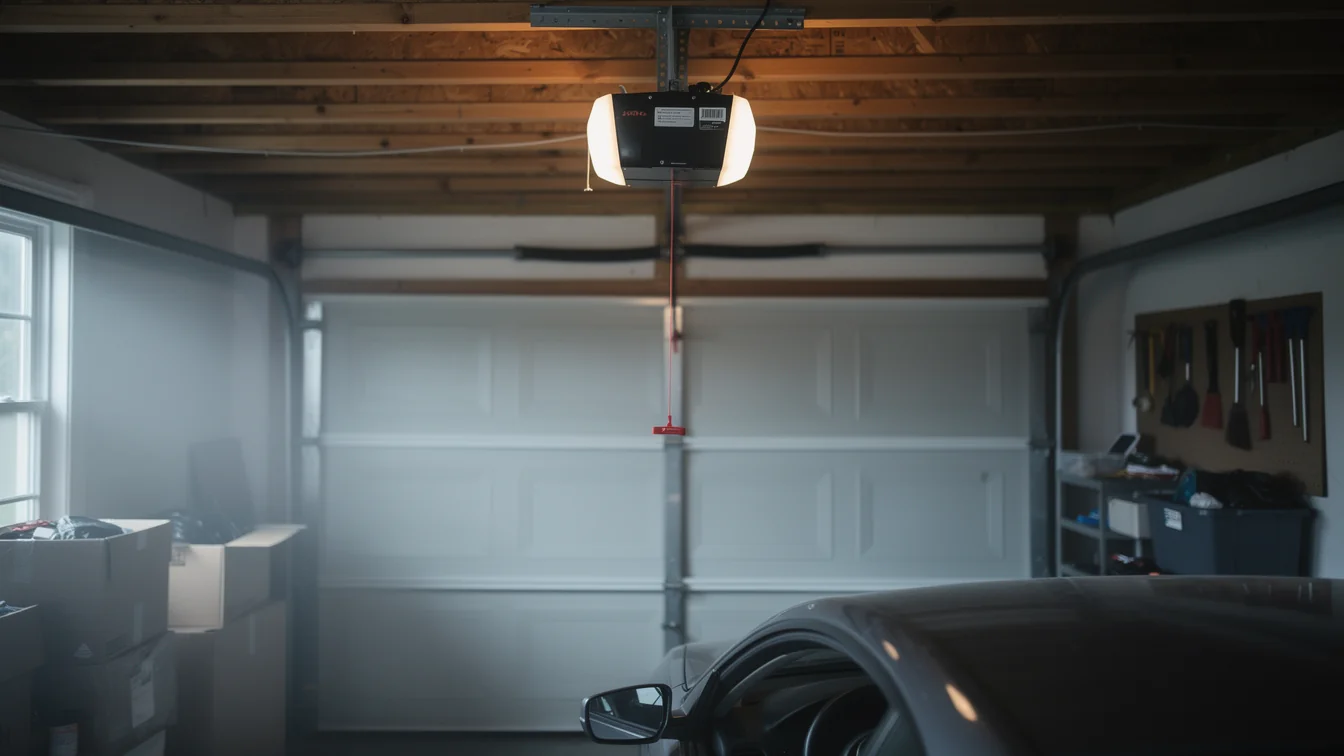
Most Lancaster garage doors run openers built for houses wired in the 1960s and 70s - here's what cold-season power cuts do to them and when to call a tech.
Read more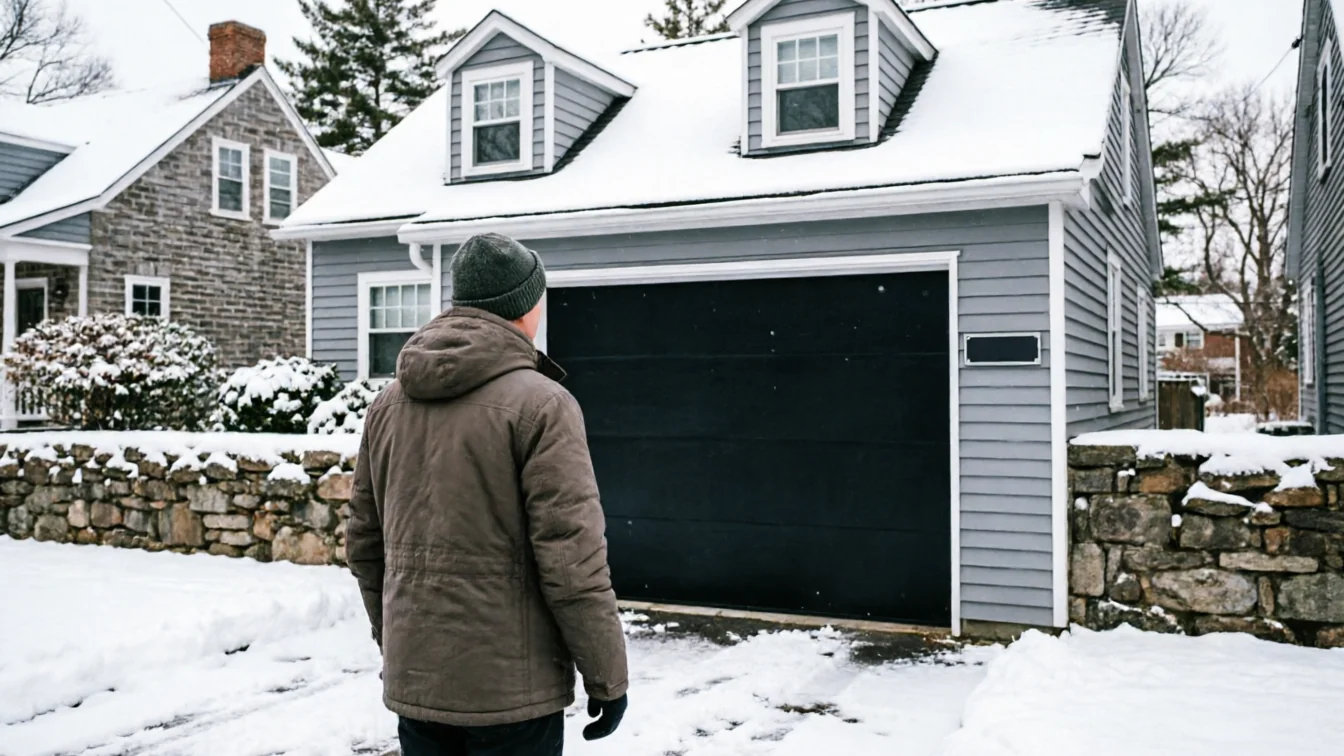
Lancaster homes built mostly between 1938 and 1995 need doors sized for older framing and cold winters.
Read moreReady when you are
Lancaster Garage Door Pros repairs and installs garage doors, springs and openers in Lancaster, PA and the surrounding area.