
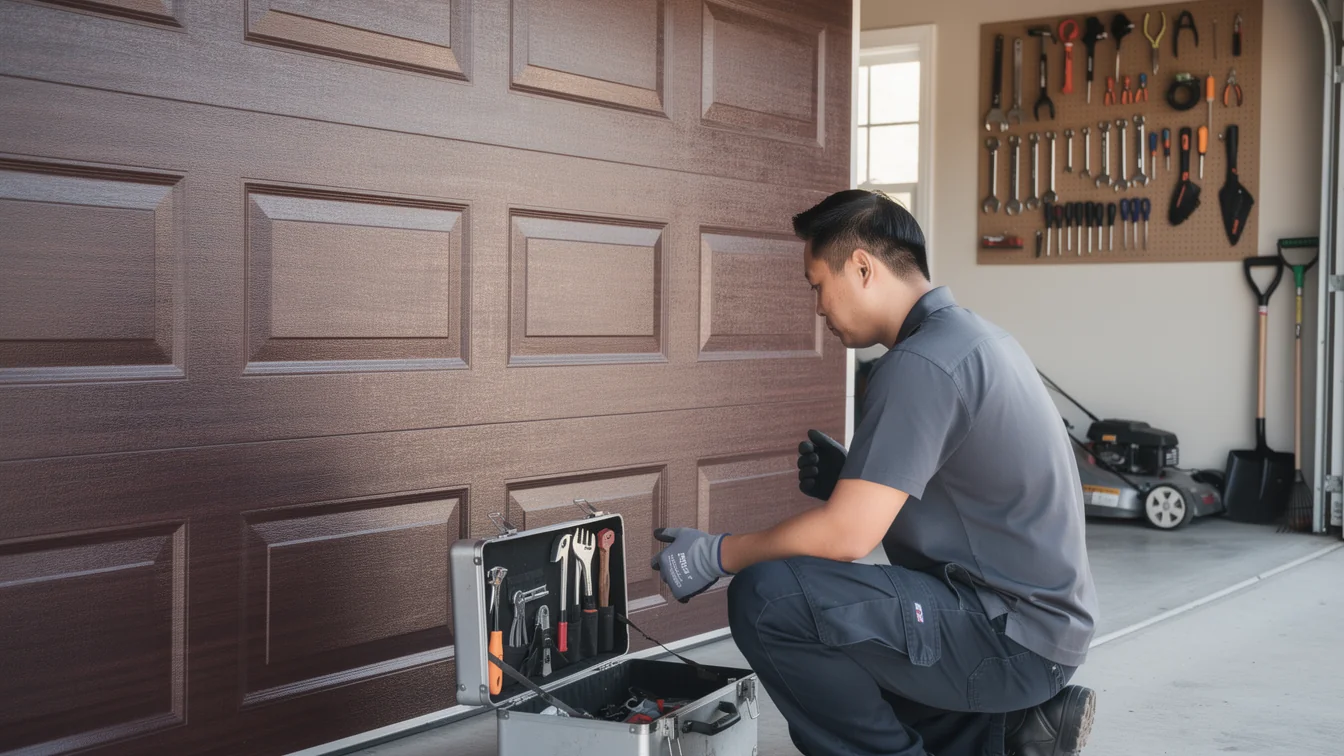
What We Actually Check When We Come Out to Your Door
Lancaster Garage Door Pros explains what a real service call checks on homes built 1938-1995, from torsion springs to winter-stressed openers in cold-climate Lancaster County.
Read moreLancaster homes mostly date to 1973, and the cold climate here is hard on old torsion springs and tracks. Here's what actually goes wrong and when to call.
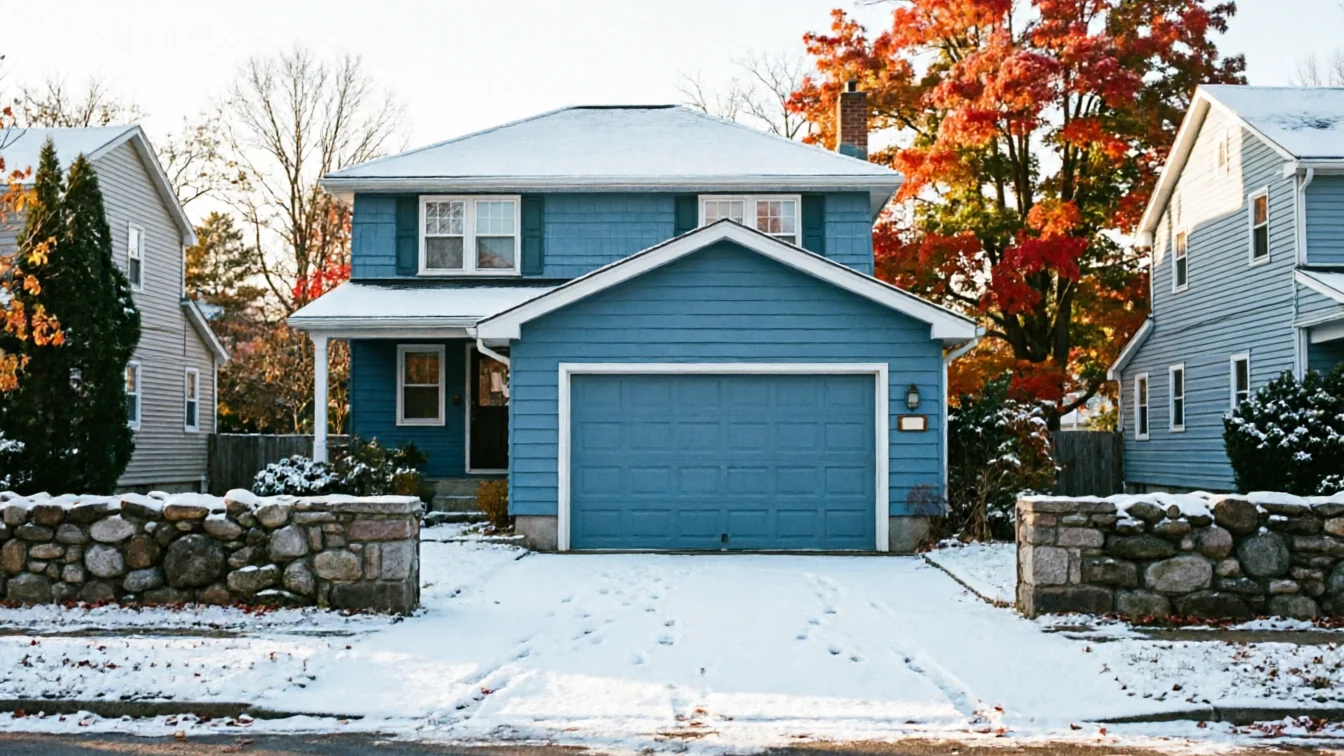
Local detail
Most of the garage doors we work on sit on houses built between 1938 and 1995, with the typical home in this area going up around 1973. That matters because people treat a 50-year-old torsion setup like it's the same thing sold at the box store today. It isn't. A lot of these houses still run the original spring size and the original track spacing, and when a homeowner calls in a handyman who's used to newer builds, he's guessing at the hardware instead of matching it.
The other mistake is spraying everything down with whatever's in the garage - WD-40 on a track, grease on a nylon roller that was never meant to be greased. On a door this old, the rollers and hinges have usually already stretched their mounting holes a little from decades of use, and the wrong lubricant just lets the slop get worse without you noticing until a cable jumps the drum.
Across the named areas around here, the pattern repeats: 1960s and 70s stock, original garage hardware, and owners assuming a tune-up means the same thing it would on a house built last year. It doesn't, and that's where the service calls start.
The area
Lancaster sits in a cold-and-severe climate band, and that's not a small detail for a garage door. Steel torsion springs lose wind tension as the metal contracts in hard cold, and on a door that's original to a house built in the 60s or 70s, that spring has already given up decades of cycles before winter even starts testing it.
Cold also stiffens the grease in an old opener's gearbox, which is why a door that worked fine in October suddenly groans and stalls in January. Tracks pick up condensation when the garage swings from near-freezing overnight to warmer in the afternoon sun, and on steel track that's had forty-plus years to pit a little, that moisture cycle speeds up rust at the mounting brackets.
We see it most on doors that never got insulated - common on houses from this build era, when insulated panels weren't standard. An uninsulated steel panel flexes more in a hard freeze, and that flex is what eventually cracks the seam along a panel's bottom corner. None of this is dramatic on its own. It's just steady wear that cold weather speeds up, year after year, on hardware that was never built to last this long.
What we find
When a torsion spring breaks on a door that's original to a 1960s or 70s build, it's almost never a fluke. Springs are rated for a number of open-close cycles, and a door installed when the house was built has usually burned through its expected life more than once over. The spring doesn't know the house is still standing - it just wears out on schedule.
Extension springs show up a lot on older single-car setups in this area, and those carry their own problem: no containment cable, so a snapped spring can whip the safety bar instead of just dropping it. That's not something we'd call rare here, given how many doors are still running original equipment.
Openers from that build era, where they're still in place, usually predate the photo-eye safety sensors that became standard later. If a door still closes without stopping for something underneath it, the opener is old enough that replacement parts for it may not exist anymore - that's a real limit, not a stall tactic. We'll tell you straight when a part isn't being made instead of hunting for a workaround that won't hold.
How we work
Call before the spring goes, if you can. A torsion spring that's visibly stretched, or a door that's started sagging a quarter inch at one corner, is giving you warning on a house this age - the hardware's had its decades of use and it's telling you. Waiting usually just moves the job from a scheduled repair to an emergency one, on a day the garage won't open at all.
If the door is original to a house built in the 60s or 70s and the opener has no auto-reverse safety feature, that's worth a call regardless of whether anything's broken yet. It's a safety gap, not a convenience issue.
Here's the honest limit: if your spring size or track hardware is old enough that the manufacturer doesn't make it anymore, we may need to special-order a cross-compatible part, and that can mean a wait you wouldn't have with a newer door. Sometimes replacing the whole unit costs less in the long run than chasing parts for something that old. We'll tell you which situation you're in before we start, not after.
Questions
On a house built in the 1960s or 70s, the original torsion spring has likely gone through its full rated number of cycles already. Cold weather speeds the failure along because the steel loses tension faster in hard cold, but the spring was wearing out regardless. It's rarely sudden - it's decades catching up at once.
Depends what's wrong. A worn spring or roller is usually a straightforward swap. But if the panel is cracked from cold-weather flex or the opener has no safety reversal, you're often better off replacing the unit instead of patching parts that may not be made anymore.
Houses built in this area's typical 1973 era usually didn't come with insulated panels, and an uninsulated steel door flexes more in hard cold, which shortens its life at the seams. It's not mandatory, but it's a reasonable upgrade if you're already replacing a damaged door.
Recommendation
More garage door guides for Lancaster homeowners.
Lancaster Garage Door Pros explains what a real service call checks on homes built 1938-1995, from torsion springs to winter-stressed openers in cold-climate Lancaster County.
Read more
Lancaster homes built mostly between 1938 and 1995 need doors sized for older framing and cold winters.
Read more
Lancaster homes built between 1938 and 1995 carry aging torsion springs and rollers that bang, grind, or pop in cold winters.
Read moreReady when you are
Lancaster Garage Door Pros repairs and installs garage doors, springs and openers in Lancaster, PA and the surrounding area.